Most supply chain conversations focus on transportation, labor, or inventory. Load containment is discussed far less often, even though it influences performance at every stage of the journey.
Load containment is one of the few variables that touches the entire supply chain, from the moment a pallet leaves the wrapper to the moment it is unloaded at its destination. When containment is right, everything downstream moves faster and more predictably. When it is not, costs quietly accumulate across operations, carriers, and customer service.
This is not an industry-specific issue. It shows up everywhere.
The Dock Is Where Performance Starts
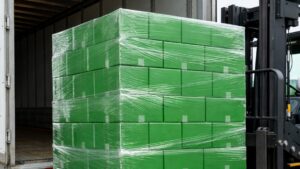
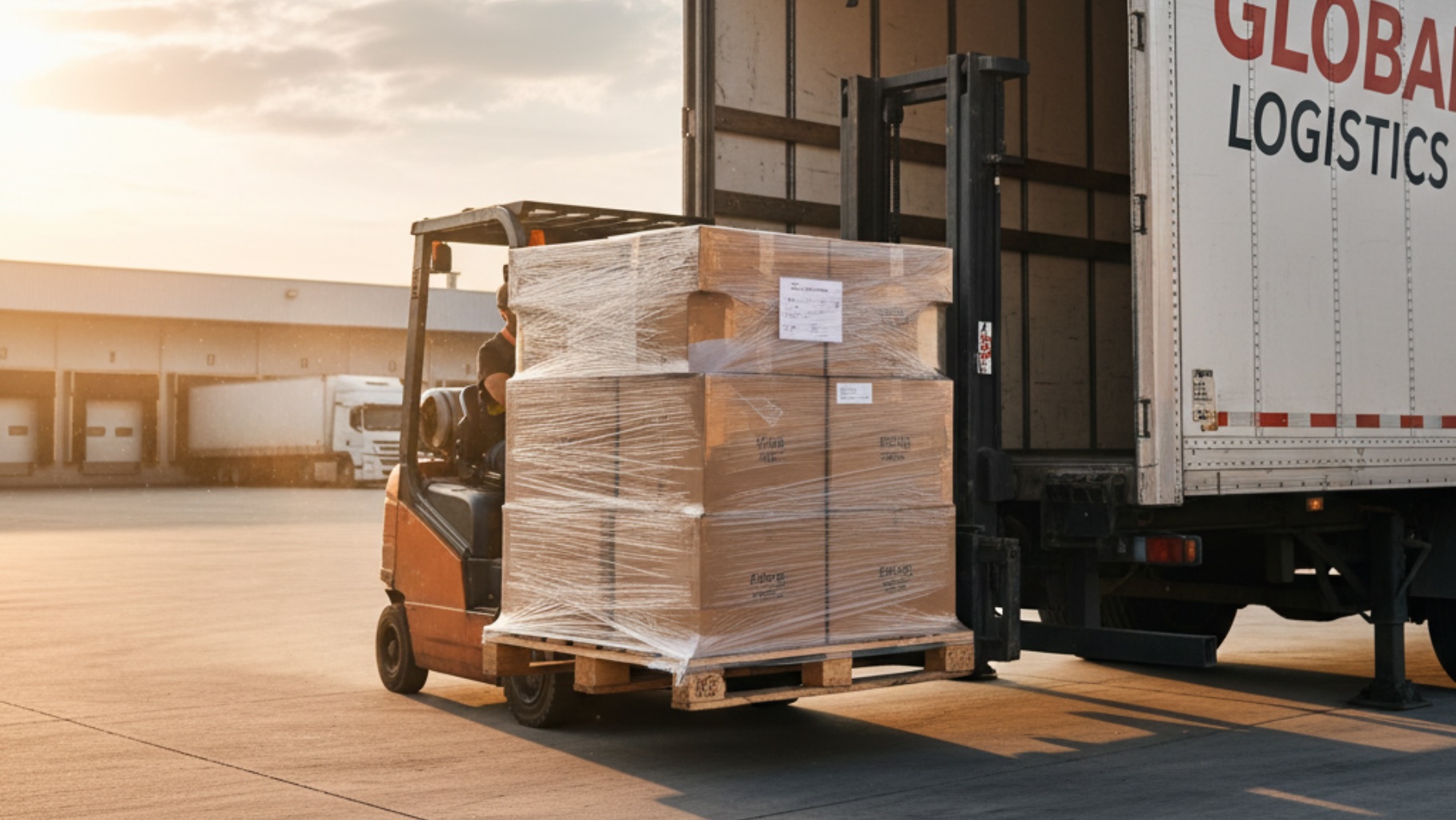
The dock is the first stress test for a pallet.
Forklifts accelerate, stop abruptly, and turn sharply. Pallets are staged tightly. Space is limited. Time is compressed. If a load is unstable at this point, the supply chain feels it immediately.
Common symptoms include:
- Leaning pallets that require restacking
- Manual rewraps that slow outbound flow
- Congestion near dock doors
- Increased safety exposure for operators
These issues are often attributed to labor or space constraints, but the root cause is frequently poor containment design.
A pallet that leaves the dock unstable rarely becomes more stable later.
Staging and Dwell Time Change Load Behavior
Between wrapping and loading, pallets often sit.
That dwell time matters.
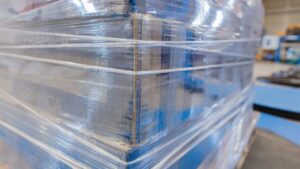
Film relaxes. Tension equalizes. Load dynamics change. If containment force was not applied correctly at the wrapper, pallets can lose stability before they ever enter a trailer.
This is where overwrapping often enters the picture. Teams try to compensate for dwell-related issues by adding more film, rather than addressing how force is distributed across the load.
The result is higher material usage without consistent improvement in performance.
Transport Amplifies Small Problems
Once a pallet is in motion, containment flaws become visible.
Braking, vibration, road conditions, and trailer movement all apply stress. Loads that were marginally stable at the dock can shift significantly in transit.
Across industries, this leads to:
- Freight damage and claims
- Rejected shipments
- Customer complaints
- Root-cause investigations that focus everywhere except containment
At this stage, the cost of failure is no longer limited to packaging. It affects service levels, carrier relationships, and brand reputation.
Handling Does Not End at Delivery
Delivery is not the finish line.
Pallets are unloaded, staged again, and often moved multiple times before reaching their final destination. In ecommerce, logistics, food and beverage, pharmaceuticals, and manufacturing, this can mean additional forklift handling and internal transport.
Each touch is another opportunity for instability to surface.
Containment that is engineered for the full journey holds. Containment that is designed only to survive the wrapper does not.
Why Containment Must Be Treated as a System
One of the most persistent misconceptions in packaging is that containment is a product decision.
It is not.
Containment is the outcome of a system that includes:
- Film performance characteristics
- Wrap pattern and force placement
- Pallet geometry and load makeup
- Equipment settings and consistency
- Real handling and transport conditions
When one element changes, the system responds. Ignoring that relationship is how small packaging decisions turn into large supply chain costs.
This is why cross-industry challenges look so similar, even when the products are not.
The Supply Chain Cost of Getting It Wrong
Poor containment does not fail loudly. It fails gradually.
Costs show up as:
- Slightly slower docks
- A few more rewraps per shift
- Incremental labor waste
- Isolated damage incidents that become trends over time
By the time leadership notices, containment issues are already embedded in daily operations.
High-performing supply chains address containment early because it is one of the few levers that improves performance across the entire system.
Engineering Containment From Dock to Delivery
Operations that treat containment as a supply chain variable, not a packaging afterthought, approach it differently.
They measure real containment requirements.
They evaluate how pallets behave during staging and transport.
They optimize wrap patterns instead of adding layers.
They validate performance across handling conditions.
This approach improves dock flow, transportation reliability, labor efficiency, damage reduction, and cost predictability.
It also creates alignment across teams that rarely share ownership, from operations to transportation to sustainability.
Bringing It All Together
Load containment is one of the few decisions that impacts the entire supply chain without ever leaving the building.
When it is engineered correctly, pallets move cleanly from dock to delivery. When it is not, the supply chain absorbs the cost at every handoff.
That is why solutions like TUFflex, when paired with SecureWrap optimization, are most effective when viewed as part of a system. Not because they solve a single problem, but because they support performance across the full journey.
If containment issues are showing up downstream, the answer is often closer to the dock than you think.
Reach out to learn how engineered containment can improve supply chain performance from the first wrap to final delivery.